Emergency Dental Care Medicaid: 2026 Guide to NJ Benefits
In pain? Learn how emergency dental care medicaid works in NJ for 2026. Dental Professionals of Fair Lawn helps you use your benefits. Call us for urgent care.
In pain? Learn how emergency dental care medicaid works in NJ for 2026. Dental Professionals of Fair Lawn helps you use your benefits. Call us for urgent care.
A dental emergency usually starts the same way. A throbbing tooth wakes you up, your child starts crying over sudden swelling, or you crack a tooth and realize you have two problems at once. You need help fast, and you also need to know whether Medicaid will cover it.
That second part is where people get stuck. They waste time calling the wrong offices, sit in pain while trying to figure out NJ FamilyCare rules, or end up in the ER for a problem a dentist should treat. That's the wrong path.
Emergency dental care medicaid rules are confusing, but the practical answer is simple. If you're in Fair Lawn, Ridgewood, or Glen Rock and you have dental pain, swelling, infection, trauma, or a broken tooth that needs prompt attention, call a local dental office that understands emergency scheduling and Medicaid verification before you spend hours guessing.
A lot of patients call when they're already overwhelmed. One parent is trying to calm a child with a swollen face. Another patient has been up all night with a toothache and is asking the same question over and over: “Will Medicaid cover this, or am I going to get stuck with a bill?”
That worry is common for a reason. Medicaid covered 55.4% of primary expected payments for emergency department visits for tooth disorders between 2020 and 2022, according to the CDC data brief on tooth-related emergency visits. That tells you something important. Many people on Medicaid still end up in hospital settings for dental problems that should be handled in a dental office.

They don't need a lecture. They need a clear answer about what to do next.
If you're dealing with sharp pain, facial swelling, bleeding, an injured tooth, or signs of infection, the move is to call a dental office first and describe the symptoms in plain language. Say where the pain is, when it started, whether there's swelling, whether you can eat, and whether the tooth was cracked, knocked loose, or broken.
Practical rule: Don't lead with “Do you take Medicaid?” Lead with your symptoms. Coverage matters, but triage comes first.
When you're in pain, distance becomes a real barrier. If the office is too far, if nobody answers clearly, or if they can't verify benefits quickly, patients often give up and head to the ER. That usually means temporary relief at best, not definitive dental treatment.
A local emergency dentist in Fair Lawn should do three things well:
That's the standard you should expect. If an office can't guide you calmly through the first phone call, keep looking.
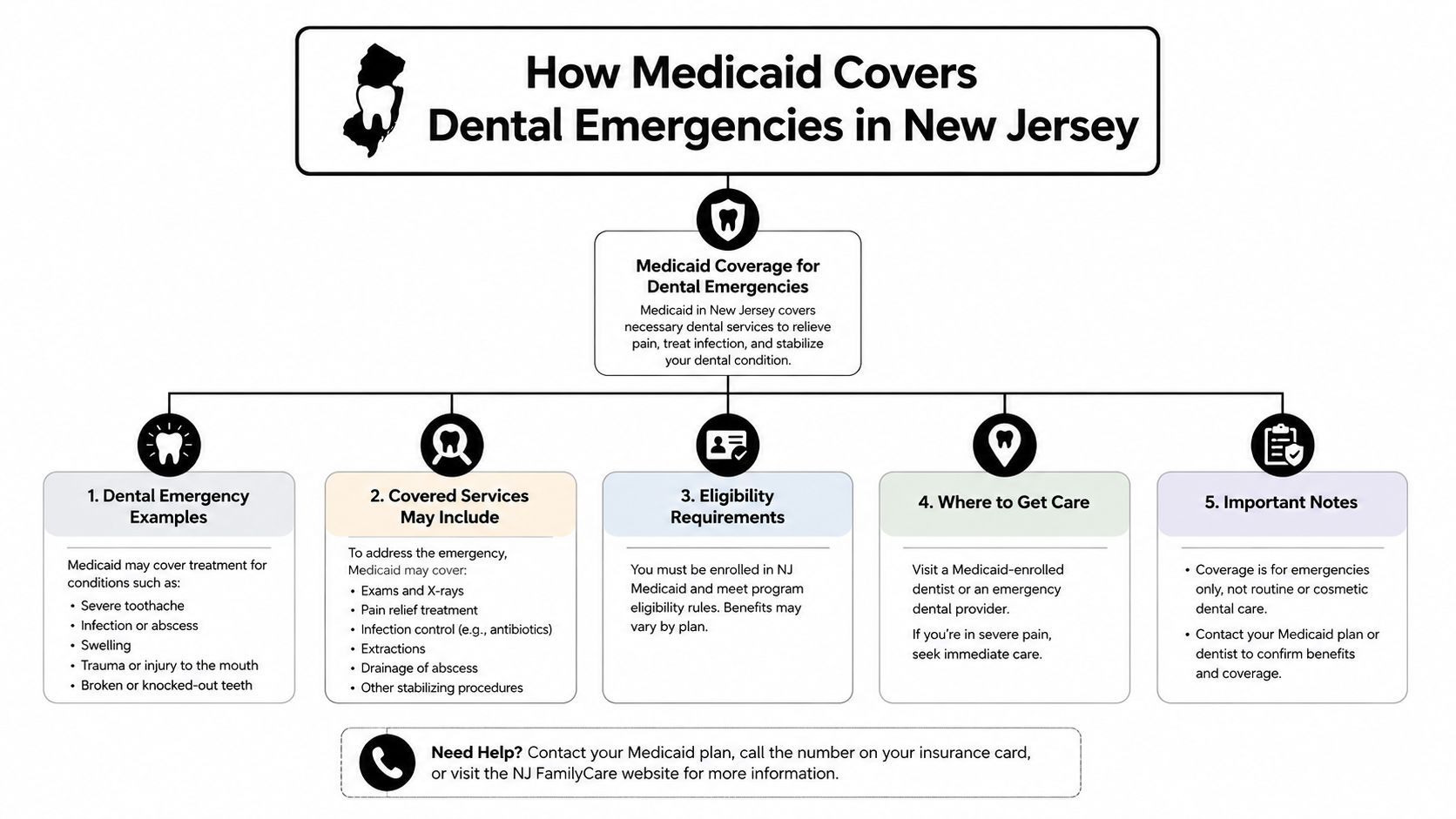
Medicaid dental coverage isn't one simple yes-or-no benefit. In New Jersey, patients usually know it as NJ FamilyCare, and the details depend on your eligibility category, age, plan status, and whether your issue qualifies as an emergency instead of routine care.
That distinction matters more now because coverage changes have been disruptive. After the COVID public health emergency ended, an estimated 12 million children and adults lost Medicaid dental coverage between April and September 2023, according to CareQuest's analysis of post-PHE dental disenrollment. If you haven't checked your current status recently, don't assume your plan is active.
Many families find this part of the process confusing.
Children on Medicaid generally have broader dental coverage. Adults often face tighter rules, more plan limitations, and more scrutiny about whether the problem is urgent. That means a child with pain, swelling, decay, or trauma may have an easier path to covered treatment than a parent with a similar complaint.
Here's the practical takeaway. If you're calling for your child, ask about immediate exam and treatment options. If you're calling for yourself, ask two questions right away:
Emergency coverage is built around immediate need. The plan is looking for signs that delay could worsen pain, infection, swelling, or trauma. That's different from care that is necessary but not urgent, such as replacing an old filling or fixing a cosmetic chip.
A dental office that works with Medicaid patients should help you sort that out before the visit whenever possible. You shouldn't have to guess which words matter when describing your condition.
Tell the team exactly what you feel. “My cheek is swollen,” “I can't bite on this side,” and “the pain wakes me up” are more useful than “I need dental work.”
You'll move faster if you collect a few basics before speaking with the office:
Don't wait until the pain becomes unbearable. Verify your NJ FamilyCare status before a crisis if you can. If you can't, call as soon as symptoms start. Early treatment usually gives the office more options, and it gives you a better shot at handling the problem in a dental chair instead of a hospital waiting room.
This is the question that affects coverage the most. Not every urgent dental issue is treated the same way by Medicaid. Some conditions are clearly emergency-level. Others are painful and important, but they may be classified as non-acute.
That difference drives claim outcomes. Medicaid programs have a 28% denial rate for non-acute urgent dental claims like moderate toothaches, compared with 5% for acute trauma or swelling, and New Jersey mirrors that pattern, based on the verified source fact provided in your brief. If you describe your problem vaguely, you increase the risk of confusion and denial.
A true dental emergency usually involves one or more of these problems: significant swelling, infection, uncontrolled bleeding, trauma, severe pain with functional problems, or a condition that can worsen quickly without prompt treatment.
A problem can still be real and still hurt without fitting that standard. That's the frustrating part for patients. Medicaid doesn't always pay based on how annoying or even how painful something feels. It often pays based on whether the condition is considered acute.
| Condition (Likely a Covered Emergency) | Symptom (May Be Considered Urgent, Not Emergency) |
|---|---|
| Facial swelling near a tooth or gum | Mild to moderate toothache without swelling |
| Dental abscess or signs of infection | Lost filling without severe pain |
| Trauma from a fall or accident | Chipped tooth with no sharp pain or bleeding |
| Uncontrolled bleeding after injury | Broken denture causing inconvenience |
| Severe pain with swelling or inability to chew | Sensitivity to cold or sweets |
| Knocked-out or loosened tooth after impact | Routine cavity discomfort |
Your wording matters. Be specific and stick to symptoms, not conclusions.
Instead of saying “I think I need a root canal,” say:
That gives the front desk and clinical team the information they need to triage you correctly and document the urgency properly.
Coverage tip: If your condition involves swelling, infection, trauma, or bleeding, say that plainly at the start of the call.
Patients often minimize what's happening. They say “it's probably nothing” while describing classic infection signs. Don't do that. If there's swelling, drainage, severe pain, or an injury, say so directly.
Being accurate helps in two ways. It gets you scheduled appropriately, and it reduces the chance that your visit gets treated like routine discomfort when it's a genuine acute problem.
When pain hits, people make bad decisions fast. They take random leftover antibiotics, wait too long, or head to urgent care for a problem urgent care can't fix. A simple plan works better.
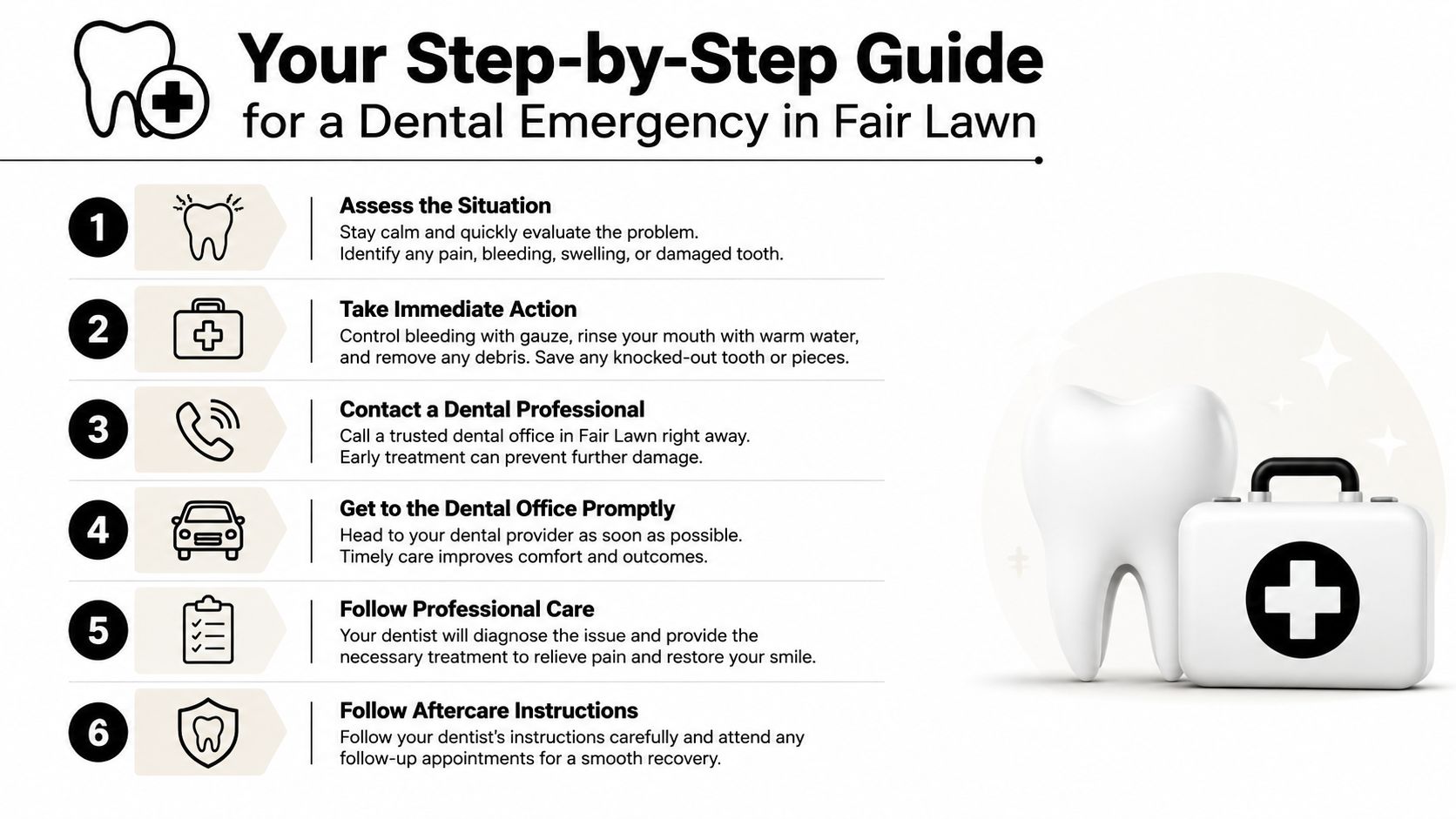
If you have severe facial swelling, trouble breathing, trouble swallowing, or heavy bleeding that won't stop, you need emergency medical attention immediately. That's not a wait-and-see situation.
If the problem is severe dental pain, a broken tooth, localized swelling, a loose tooth, or a suspected abscess, call a dentist right away.
Don't assume the ER is your best first stop. For many dental problems, it isn't.
Call the office and describe the issue in direct terms. Mention if you have NJ FamilyCare, but don't make insurance the first sentence. The first sentence should be the problem.
Before or during the call, gather:
A photo can help the team understand whether you need immediate treatment or hospital-level care.
The office may tell you to rinse gently, use a cold compress, protect a broken tooth, or avoid chewing on one side. Follow those directions exactly.
Don't place aspirin on the gum. Don't put random filling material into deep broken areas unless the office advises it. Don't start leftover antibiotics from another illness.
If a tooth is knocked out or loosened after trauma, time matters. Call immediately and follow the office's instructions before handling the tooth repeatedly.
Ask these clearly:
That doesn't guarantee coverage, but it prevents blind surprises.
A lot of patients think they know the treatment before the exam. Sometimes they're right. Often they're not.
The office may need dental x-rays, a focused exam, and a clinical review before they can tell whether you need an extraction, infection management, root canal therapy, or a temporary stabilizing treatment. Let the diagnosis come first.
Finding an office that will see Medicaid patients for urgent problems is harder than it should be. In New Jersey, only 52% of Medicaid enrollees have access to an emergency dental provider within 30 miles, based on the verified source fact in your brief. That gap is exactly why so many patients lose time calling office after office while the pain gets worse.

A proper emergency visit is not chaos. It should feel organized.
At Dental Professionals of Fair Lawn emergency dental care, the process starts with symptom review and benefit verification, then moves to a focused exam and any needed dental x-rays. The point is to identify the source of pain quickly and decide what can be done that day to relieve it and protect the tooth or surrounding tissue.
Most emergency patients want one answer: “Can you stop this pain today?” That's a fair question. Sometimes the answer is immediate definitive treatment. Sometimes it's a stabilizing step followed by a return visit. What matters is that the plan is clear.
You should expect the office to explain:
A nearby office can often address a dental issue before it escalates into a missed workday, a missed school day, or an ER visit that doesn't solve the root problem. That matters for adults, kids, anxious patients, and families trying to manage transportation and schedules.
A dental emergency isn't only about pain. It's also about speed, documentation, plan verification, and getting to the right chair the first time.
Don't be. Emergency patients come in with all kinds of histories. Some haven't been to a dentist in years. Some lost coverage and delayed care. Some are embarrassed that a “small toothache” turned into swelling.
None of that changes what needs to happen now. You need a diagnosis, pain relief, and a realistic treatment plan.
Patients usually fear two things at the same time. First, they're afraid the treatment will hurt. Second, they're afraid the bill will surprise them. The second fear is easier to reduce when the office handles billing carefully and explains limitations before treatment moves beyond emergency care.
That's why a good front desk team matters. They verify plan details, submit claims correctly, document symptoms clearly, and flag when a service may fall outside emergency Medicaid benefits. Practices that want stronger billing workflows often look at how specialized dental RCM solutions organize claims, eligibility checks, and revenue cycle steps, because billing errors create real stress for patients.
Coverage disruptions don't stay on paper. They show up in real pain and delayed treatment.
When California eliminated adult Medicaid dental benefits in 2009, researchers found an immediate increase of 7.21 visits per 100,000 enrollees per month in non-traumatic dental condition emergency department visits, according to the quasi-experimental analysis published in PMC. That's the practical lesson. When people lose routine and restorative access, they don't stop having dental problems. They show up later in crisis.
Emergency dental care medicaid benefits are usually aimed at urgent relief, not every long-term restorative goal. That means some services may fall outside what your plan covers, especially if the problem moves from immediate pain control into reconstruction or elective improvement.
Examples often include:
If a service isn't covered, you still have options. Ask for the treatment sequence, not just the final price.
That can mean getting pain relief and infection control first, then discussing a bridge, denture, crown, or financing path for the next phase. If you need long-term planning, review the office's patient financing options before you delay care. Delay is what turns manageable treatment into emergency treatment.
Office advice: Ask for a written breakdown of what is emergency care, what is follow-up care, and what may be your responsibility.
Dental pain rarely improves because you ignored it. More often, it spreads, swells, interrupts sleep, and turns a manageable problem into an urgent one. If you're trying to figure out emergency dental care medicaid rules while your mouth is throbbing, stop trying to decode everything alone.
The better move is simple. Call a local office, describe the symptoms clearly, verify your NJ FamilyCare status, and get examined. That approach is faster, safer, and more likely to get you actual treatment instead of temporary relief.
National data shows rural Medicaid adults can be 2 to 3 times more reliant on emergency rooms for preventable dental pain due to workforce shortages and benefit gaps, according to the Medicaid adult non-trauma dental ED visits report. Fair Lawn patients don't need to fall into that cycle when local dental care is available.
If you live in Fair Lawn, Ridgewood, or Glen Rock, the priority is getting into the right office quickly. That means an office that understands emergency triage, Medicaid verification, dental x-rays, and what to do when a painful problem can't wait.
If you have swelling, trauma, severe tooth pain, bleeding, or signs of infection, don't wait for it to become a hospital problem. Call now. Bring your NJ FamilyCare information. Be direct about your symptoms. Let the office tell you the fastest safe path forward.
You do not need to guess your way through this. You need a clear diagnosis and a team that knows how to handle the insurance side without losing sight of the primary goal, which is getting you out of pain.
If you need urgent dental help in Fair Lawn, Ridgewood, or Glen Rock, contact Dental Professionals of Fair Lawn to request emergency care and get guidance on using your Medicaid benefits as quickly as possible.