Cost of Spacers for Teeth: A Guide for Fair Lawn, NJ
Curious about the cost of spacers for teeth? Our Fair Lawn, NJ dental experts explain pricing, insurance, and what to expect. Schedule a consultation today.
Curious about the cost of spacers for teeth? Our Fair Lawn, NJ dental experts explain pricing, insurance, and what to expect. Schedule a consultation today.
Orthodontic spacers usually cost $50 to $150 per session without insurance, but in many cases they're folded into the overall braces fee, so the direct out-of-pocket cost for this step is often minimal. If you've just been told you or your child needs spacers, that first question is almost always the same: what is this, and how much is it going to cost?
That reaction is completely normal. A parent hears “spacers” during an orthodontic visit in Fair Lawn and immediately starts thinking about comfort, timing, insurance, and whether this is one more surprise bill before braces even begin.
The good news is that spacers are usually a small, short-term part of treatment. They're used to prepare the teeth for the next step, and for most families, they're far less expensive than the braces or orthodontic system that follows. If you're searching for a dentist near me, a dentist in Fair Lawn, NJ, or even guidance on related care like Invisalign, Six Month Smile, tooth extraction, or an emergency dentist, understanding this one step can make the whole process feel much less overwhelming.
A common Fair Lawn scenario goes like this. A child comes in for an orthodontic evaluation. The parent expects to talk about braces, maybe digital scans, maybe timing. Then the clinician says spacers need to go in first.
That one word can create a lot of uncertainty. Are spacers the same as braces? Are they painful? Is this another separate fee? For many families in Fair Lawn, Ridgewood, and Glen Rock, the confusion starts before treatment even begins.
Spacers are easy to underestimate because they're small. But they matter. They help create the room needed before certain orthodontic appliances can fit properly, especially in patients with tight contacts between the back teeth.
Parents also mix up several different terms. “Spacer,” “separator,” and “space maintainer” can sound interchangeable, but they don't mean the same thing. That's one reason the cost of spacers for teeth can seem confusing online.
Spacers are usually not the big-ticket part of treatment. They're the setup step that helps the main treatment go smoothly.
Most readers looking for a dentist in Fair Lawn, NJ want practical answers, not jargon. The most common questions are:
Those are the right questions to ask. Once you understand what spacers do, the price and insurance side makes much more sense.
Orthodontic spacers are tiny separators placed between certain back teeth. Their job is simple. They create a little room so orthodontic bands or related appliances can fit where they need to fit.
A useful way to think about them is a parking spot saver. If the space between two molars is too tight, the orthodontist needs a gentle way to open just enough room before the next appliance goes in.
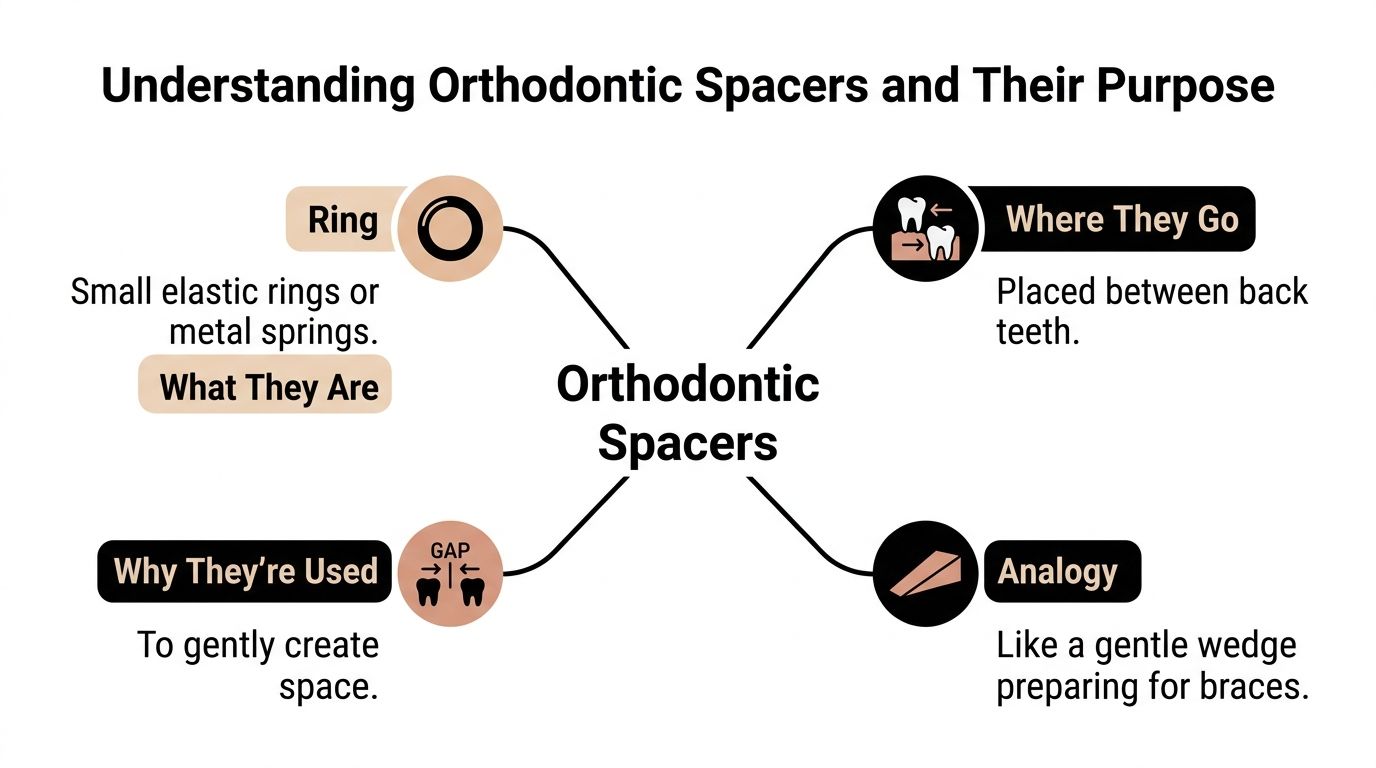
Some spacers are elastic. Some are metal. Either way, they're temporary.
Their purpose is preparation, not long-term correction. In treatment protocols for braces, these devices are placed 7 to 10 days before bracket installation to create 0.5 to 1.0 mm of space between molars, and they're part of the broader braces fee rather than a major separate device cost, as described in the verified orthodontic cost data above. That's why many patients never see spacers listed as a standalone charge.
A common misunderstanding for parents is that orthodontic spacers are not the same thing as pediatric space maintainers.
A space maintainer is a different appliance used after a child loses a baby tooth early. It helps hold that space so nearby teeth don't drift into it. The verified cost data for pediatric space maintainers shows that plastic versions average about $50 and metal versions can range up to $200 per unit. That price difference reflects materials and fabrication complexity, not the same short-term separator used before braces.
Here's a simple comparison:
| Appliance | Main job | Typical use |
|---|---|---|
| Orthodontic spacer | Creates a small gap between teeth | Before braces or bands |
| Space maintainer | Holds a gap open after early tooth loss | Pediatric dental care |
Helpful distinction: A separator makes space. A maintainer keeps space.
Not every orthodontic patient gets spacers. The verified clinical data indicates they're used in about 70% of pediatric orthodontic cases requiring traditional braces, while they're rarely used for adults in clear aligner treatment. That's why a teen starting metal braces may need them, while an adult starting Invisalign may never hear about them at all.
If you're also looking at related treatment options such as cosmetic dentistry, cleaning and exams, dental x-rays, or a new patient exam, this distinction matters. Different orthodontic systems use different preparation steps, and spacers are tied much more closely to traditional braces than to aligners.
If you're focused on the cost of spacers for teeth, the direct answer is straightforward. Verified 2023 to 2024 data shows orthodontic spacers typically cost $50 to $150 per session without insurance, though they're often included within full orthodontic treatment that averages $5,000 to $6,000 overall.
That's the key point often overlooked. Spacers are low-cost on their own, but many families won't pay a separate line item because the practice includes them in the larger orthodontic plan.
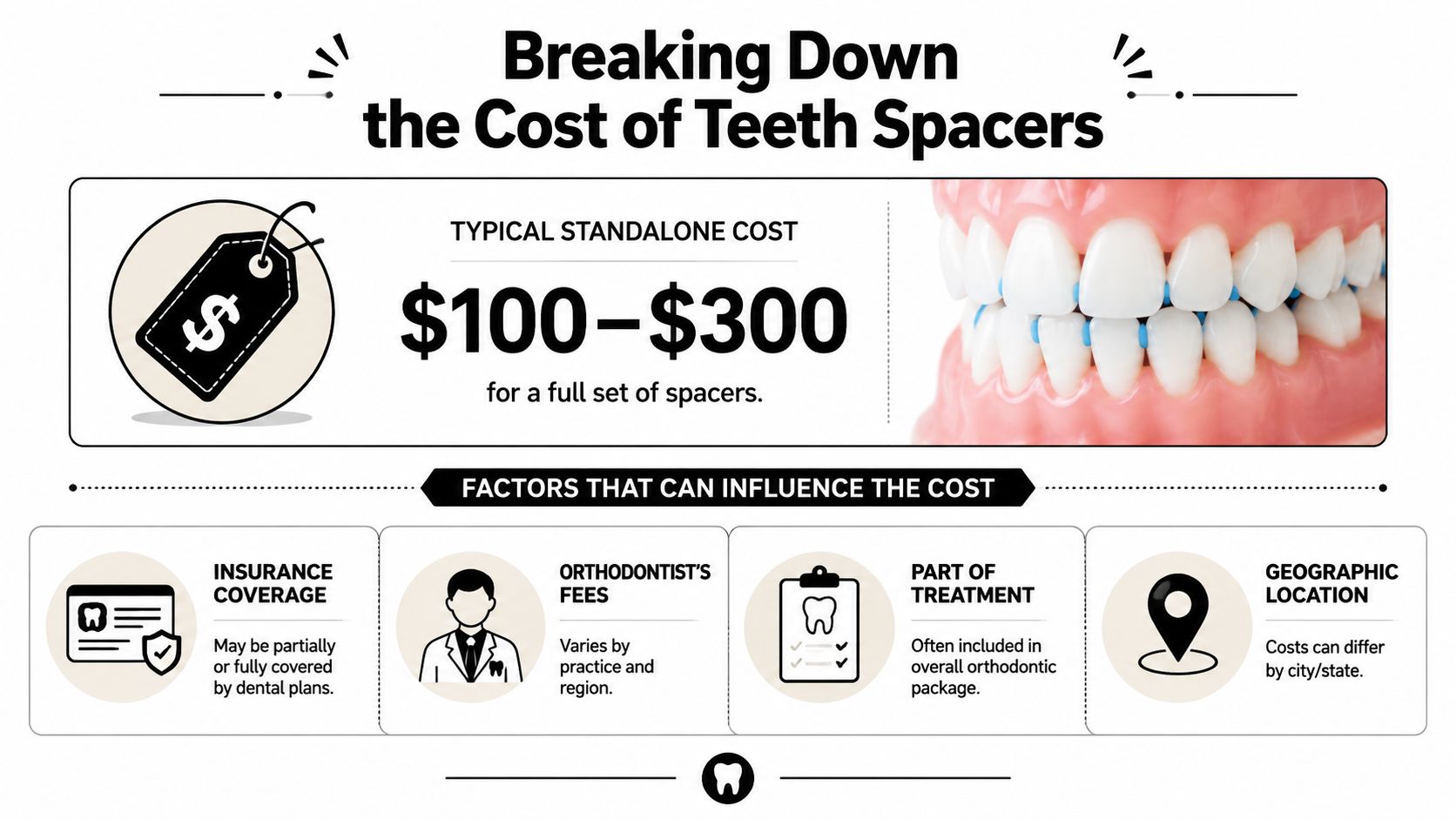
Many orthodontic offices bundle preparatory steps into the full treatment fee. Verified data notes that in major U.S. markets, the braces fee generally falls in the $3,000 to $6,000 range for traditional metal systems, and full-course orthodontics may range from $5,000 to $7,000 depending on complexity and geography. In that setup, the spacer cost is absorbed into treatment because it's a temporary step used to place the main hardware.
There's another piece of verified data worth knowing. In private pediatric practices, spacer placement is often bundled into an initial setup or consultation fee ranging from $150 to $250, and that bundling trend has increased since 2020. So even when you're paying for the beginning of treatment, you may still not see “spacers” listed by themselves.
The spacer itself isn't usually what drives the price. Other factors do:
Practical rule: Ask whether the quote is for the spacer itself, the initial orthodontic visit, or the full treatment plan. Those are not the same number.
For most patients, spacers are one of the smallest financial parts of orthodontic care. Verified cost reporting also shows they represent less than 3% of the average cost of full orthodontic treatment. So when you're comparing options for braces, Invisalign, or even related services like cosmetic dentist near me and restorative dental care, it makes more sense to evaluate the full treatment plan than to focus only on the separator fee.
Insurance is where many families get frustrated, because the answer often depends on how the treatment is categorized. Verified data shows that orthodontic plans may include a lifetime orthodontic maximum of $1,000 to $3,000, which can reduce out-of-pocket costs significantly when spacers are part of overall treatment.
For that reason, patients often find that the spacer step itself doesn't create much financial strain. The bigger issue is understanding what your plan counts as orthodontic treatment, what falls under pediatric dental coverage, and what gets labeled preventive rather than urgent.
In New Jersey, verified 2024 guidance highlights a confusing but important split. Insurance may cover an expander while denying a preventive space maintainer if the case isn't classified as medically urgent.
That distinction matters because parents often assume anything that helps tooth development will be covered the same way. It isn't always. A family may hear “this appliance helps future eruption” and reasonably think the claim should go through, only to learn the carrier sees it as preventive.
Here's a simple way to think about common payment scenarios:
| Situation | Coverage pattern patients often see |
|---|---|
| Orthodontic spacers before braces | Often bundled into braces benefits |
| Traditional braces | May apply to orthodontic lifetime maximum |
| Pediatric space maintainer | May be denied if classified as preventive |
| Urgent dental issue | May be handled differently than planned orthodontics |
If your explanation of benefits feels hard to read, this guide to understanding medical bills can help you make sense of insurer language before you call the office with questions.
A strong treatment plan should come with a clear financial conversation. If insurance leaves a gap, monthly payment arrangements can make care more manageable for families balancing orthodontics with routine dental care, cleaning and exams, or other needs like emergency visits and restorative work.
Patients comparing local care in Fair Lawn often want a practice that can explain both treatment and payment in plain English. If you're reviewing options, it helps to ask about available financing options for dental treatment before treatment starts so there are no surprises later.
Insurance language can be confusing, but the right office team should be able to translate it into a simple answer about what you'll owe and when.
The appointment for spacers is usually simple. Most patients are surprised by how quick it feels. The bigger challenge is the first few days afterward, when the teeth start to feel pressure and eating can become annoying.
That pressure is expected. It usually feels more like soreness or tightness than sharp pain. Many kids describe it as the feeling of food wedged between their teeth, except it stays there while the teeth begin to separate.
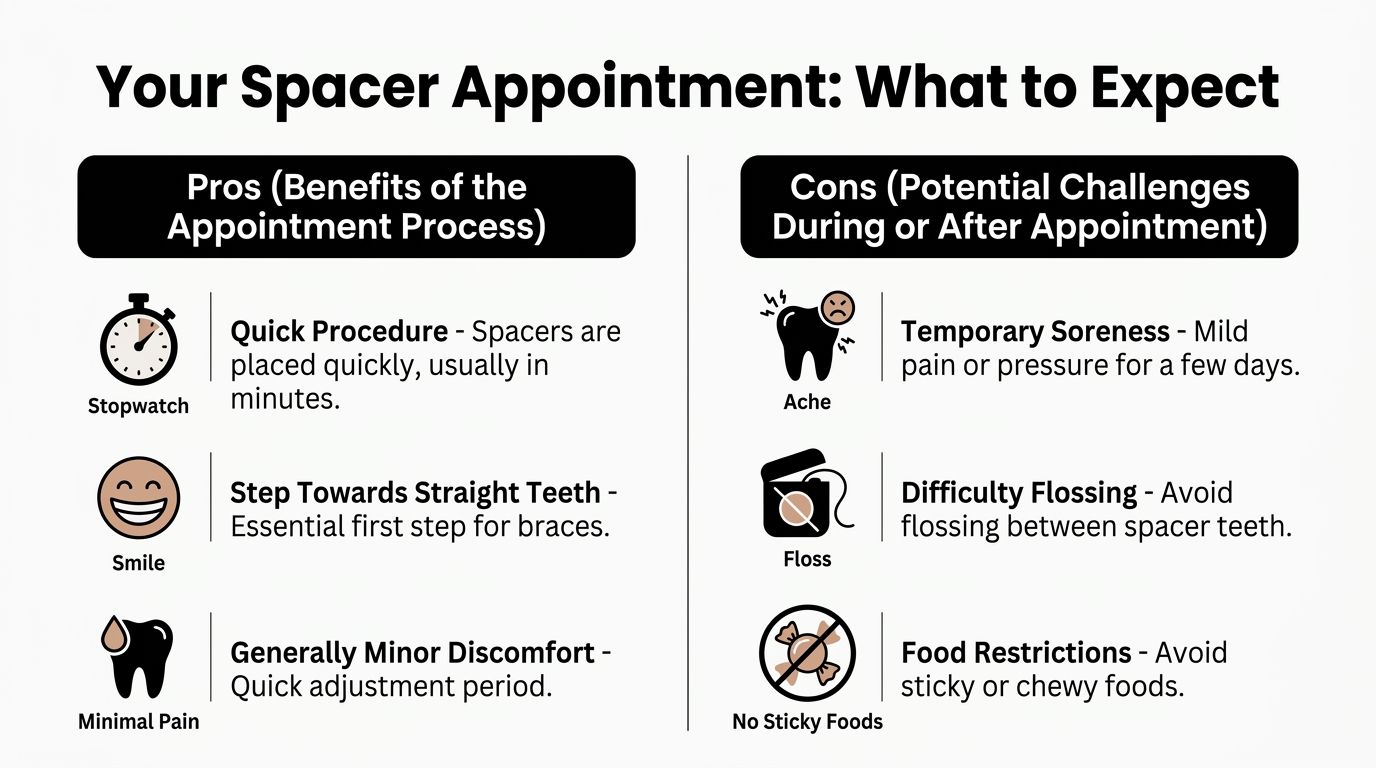
The visit usually includes a quick review, placement of the spacers, and instructions for home care. The process is brief, but precision matters because each spacer has to sit properly between the target teeth.
Patients should expect:
For families considering pediatric orthodontics locally, this is often the first practical step before braces. If you want a broader overview of early care, child orthodontic treatment information can help you understand where spacers fit into a full plan.
Home care matters more than many patients realize. Verified 2025 pediatric dental data indicates a 15% rise in spacer-related emergency cases, with emergency intervention often costing $200 to $500+ when spacers are dislodged after patients don't follow diet guidance.
That's why the food rules aren't just picky office instructions. They protect the appliance and help you avoid an unplanned visit.
A few habits make a real difference:
When a spacer comes loose, the problem usually isn't the device itself. It's what the patient ate or how the area was cleaned.
If the spacer falls out, discomfort becomes hard to manage, or the patient can't tell whether the appliance is still in place, it's worth calling. It may be a minor fix. It may also be important to replace it before the next orthodontic step.
Families also sometimes confuse normal soreness with an urgent issue. If the concern feels more like trauma, swelling, or severe pain than routine pressure, that's when an emergency dentist evaluation may be appropriate.
By the time most patients finish learning about spacers, they realize two things. First, this step is usually small and manageable. Second, getting clear answers early makes the whole orthodontic experience less stressful.
That matters whether you're exploring traditional braces, Invisalign, or Six Month Smile. It also matters if you're a parent juggling preventive visits, dental x-rays, cosmetic goals, or treatment decisions that may eventually include restorative care, dental implants near me, or even tooth extraction. People don't just want treatment. They want a plan that feels organized, comfortable, and understandable.
Orthodontic care is easier when the office knows the community and speaks plainly about cost, timing, and comfort. Fair Lawn families often want one trusted dental home that can help with routine care, cosmetic dentistry, and urgent dental needs, not just a single appliance.
Dr. Jody Bardash and the team at Dental Professionals of Fair Lawn provide that kind of continuity for patients in Fair Lawn, Ridgewood, and Glen Rock. The practice combines modern technology with a calm, patient-focused approach, which is especially helpful for children, teens, and anxious adults starting orthodontic care.
If you're comparing a dentist near me in Fair Lawn, NJ and want straightforward guidance about the cost of spacers for teeth, insurance details, or what kind of orthodontic system makes sense, a consultation is the best place to start. It's the easiest way to turn general online information into a treatment plan that fits your mouth, your timeline, and your budget.
If you're ready for clear answers about orthodontic spacers, braces, Invisalign, Six Month Smiles, or any other dental concern, contact Dental Professionals of Fair Lawn. The team serves Fair Lawn, Ridgewood, Glen Rock, and nearby New Jersey communities with compassionate care, modern technology, and practical guidance that helps you move forward with confidence.