Clear Braces Near Me: A 2026 Guide for Fair Lawn, NJ
Searching for clear braces near me in Fair Lawn, NJ? Learn about Invisalign vs. ceramic braces, costs, and process. Schedule your consultation today!
Searching for clear braces near me in Fair Lawn, NJ? Learn about Invisalign vs. ceramic braces, costs, and process. Schedule your consultation today!
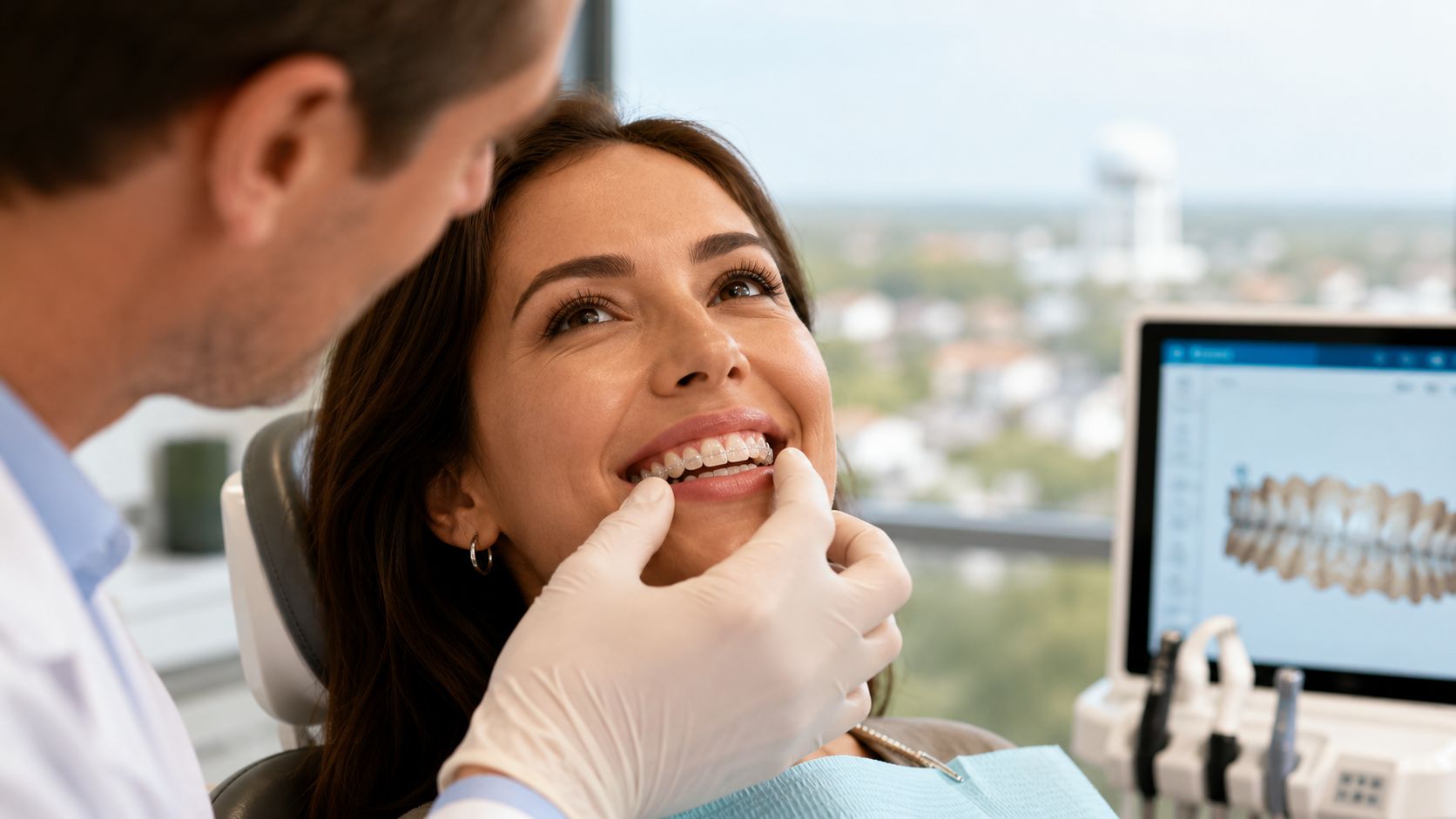
If you're searching for clear braces near me, there's a good chance you've already had the same thought many adults and teens in Fair Lawn have. You want straighter teeth, but you don't want a mouth full of metal in every photo, meeting, school event, or family gathering.
That's a reasonable goal. Patients aren't always looking for “the most orthodontics possible.” They're looking for a treatment that fits real life, looks discreet, and delivers a smile they feel good about showing.
In Fair Lawn, Ridgewood, and Glen Rock, patients often start with one question and quickly realize they have three. Can clear braces work for my teeth? Which kind of clear braces are we talking about? And will I be able to keep up with the treatment once daily life gets busy?
A local search usually starts in a familiar moment. You catch your smile in a mirror, on a Zoom screen, or in a photo someone else took. Maybe your front teeth overlap a little more than you'd like. Maybe an old retainer stopped fitting years ago. Maybe your child or teen wants straighter teeth but feels nervous about noticeable braces.
That's when people start typing “clear braces near me” and hoping the answer is simple.
In reality, the right answer depends on more than appearance. Some patients want removable trays because they like the idea of taking them out for meals and brushing. Others do better with fixed clear braces because they don't want treatment success to depend on remembering to wear aligners all day. Both paths can work well. The key is matching the treatment to the person, not forcing every smile into the same system.
For families trying to sort through local options, it also helps to understand why some practices show up more clearly in online search. A practical overview of SWAT Marketing Solutions' local SEO explains how local search results are shaped, which can make it easier to find nearby care that meets your needs instead of just clicking the first listing you see.
Those looking for clear orthodontic treatment in Fair Lawn often balance a few priorities at once:
The most useful consultation isn't the one that says yes fastest. It's the one that explains what will work, what won't, and why.
That honest comparison matters. Clear orthodontics can be an excellent choice, but it works best when expectations are realistic from the beginning.
When people say clear braces, they usually mean one of two treatments. The first is clear aligners, which are removable plastic trays. The second is ceramic braces, which are fixed brackets attached to the teeth and designed to blend in better than metal braces.

Clear aligner therapy was first commercialized in 1999 when Align Technology introduced Invisalign, and a review article describes it as having an average 80% to 90% success rate for mild to moderate tooth movements. That same review explains that aligners move teeth with a series of custom-made plastic trays that apply gentle, controlled force, which is why they've become a foundational alternative to traditional braces for crowding, spacing, and front-tooth alignment cases, as described in this review of clear aligner therapy.
Patients usually like aligners for obvious reasons. They're removable, nearly invisible, and easier to manage during meals. If you're comparing appearance alone, aligners often feel like the least disruptive option.
Ceramic clear braces work more like traditional braces. Brackets stay bonded to the teeth, and the system moves teeth continuously because it stays in place. The difference is the material. Ceramic braces are made from a tooth-colored composite ceramic rather than stainless steel, which makes them less visible while still using similar bracket mechanics. Independent orthodontic guidance also notes that the material is designed to resist discoloration, though it's more brittle than metal, as explained by West Walk Orthodontic Group's overview of clear braces.
The biggest difference isn't just what they look like. It's how treatment happens day to day.
Practical rule: If you want freedom, aligners usually give you more of it. If you want less temptation to fall off schedule, fixed braces may be the safer choice.
Patients usually don't need more marketing language here. They need a side-by-side comparison that reflects real life. The right choice depends on your bite, your habits, your timeline, and how much responsibility you want treatment to place on you each day.

| Feature | Invisalign (Clear Aligners) | Ceramic Braces (e.g., Damon Clear) | Six Month Smiles |
|---|---|---|---|
| Appearance | Nearly invisible trays | Tooth-colored, discreet brackets | Less noticeable than metal because brackets and wires are designed to blend in |
| Removability | Removable for meals and brushing | Fixed to teeth | Fixed to teeth |
| Daily responsibility | High. You must keep them in consistently | Lower. They work without being taken in and out | Lower. Similar fixed-braces responsibility |
| Oral hygiene | Easier to brush and floss when aligners are out | Requires careful cleaning around brackets | Requires careful cleaning around brackets |
| Food restrictions | Fewer restrictions because trays come out for meals | More limits because brackets can be damaged by certain foods | Similar fixed-braces limits |
| Best fit | Mild to moderate crowding, spacing, and selected bite cases | Patients who want discreet braces with continuous force control | Adults focused on cosmetic front-tooth alignment |
| Main trade-off | Great appearance and flexibility, but success depends on compliance | More consistent wear, but more visible than aligners and more cleaning work | Targeted cosmetic approach, but not every bite is a fit |
Aligners are often the favorite for adults with busy professional or social lives. They're a strong option when the main goals are improving mild to moderate crowding, spacing, or visible front-tooth alignment. They also make brushing and flossing simpler because nothing is bonded to the teeth.
The downside is behavioral, not cosmetic. If trays spend too much time out of the mouth, treatment slows down or loses accuracy. Patients who travel often, snack frequently, or know they're likely to forget may love the idea of aligners but do better with a fixed system.
Ceramic braces make sense when a patient wants a more discreet look than metal braces but needs the control of a fixed appliance. Because they stay on the teeth, they remove the daily decision of whether to wear treatment. That can be a major advantage for teens, busy adults, and anyone who wants a set routine.
Ceramic systems also come with trade-offs. The brackets are less visible, but they're still there. Cleaning takes more effort, and ceramic material is more brittle than metal.
Six Month Smiles is often part of the conversation when adults are mainly concerned with the visible part of the smile. It can be appealing for cosmetic alignment goals, especially in front teeth. It's not automatically the right choice for every bite issue, though, which is why the consultation matters more than the brand name.
For a deeper look at adult decision-making, this comparison of Invisalign vs braces for adults can help clarify what matters most before you commit.
If your top priority is “I don't want to think about my orthodontics every hour,” fixed clear braces often deserve a closer look than people expect.
The short answer is that many people are. The more useful answer is that candidacy depends on the kind of movement your teeth and bite need.
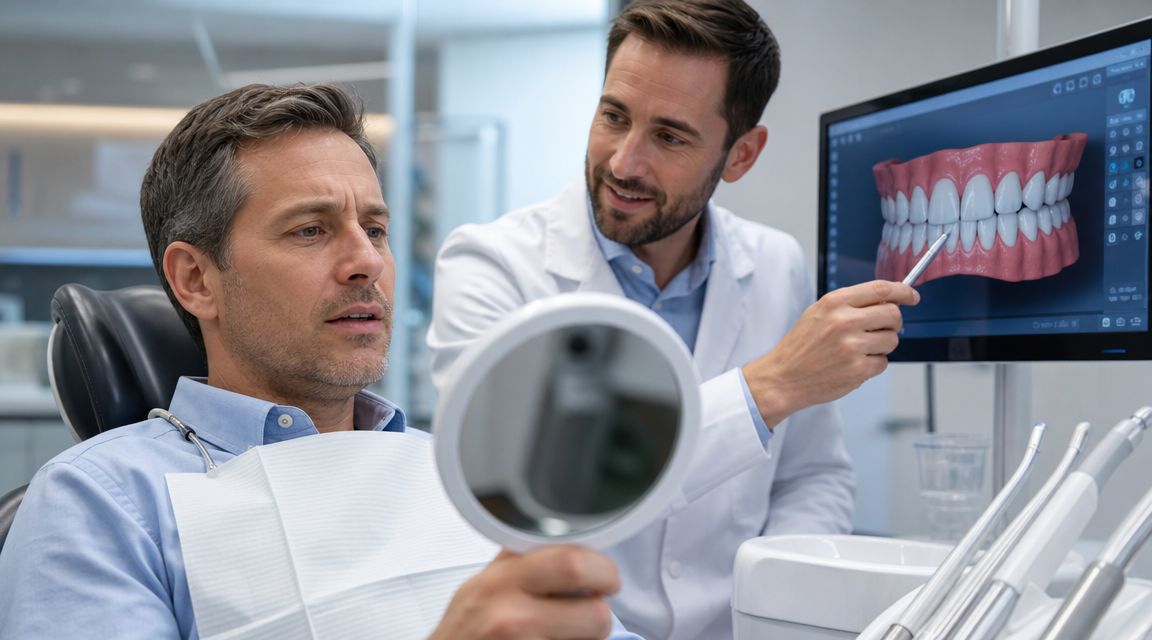
Clear orthodontic treatment often works well for people dealing with cosmetic or moderate alignment concerns such as:
For many adults in Fair Lawn, the appeal is simple. They want to improve how their smile looks without choosing the most noticeable orthodontic option.
An honest evaluation matters more than enthusiasm. While clear aligners can fix many crowding and overbite issues, neutral orthodontic guidance notes that candidacy for severe bite problems depends on a full bite analysis, and some cases may achieve better results with fixed braces, as noted in this clear aligner candidacy overview.
That doesn't mean clear treatment fails often. It means some cases ask more of the appliance than the appliance can predictably deliver.
A few situations usually deserve a closer look:
Many patients assume “clear” and “advanced” automatically mean “better.” Sometimes that's true. Sometimes the better choice is the appliance that gives the dentist more reliable control over movement.
A discreet treatment is only a good treatment if it can deliver the result your bite needs.
That's why a digital scan and bite analysis are so important. They show whether your case is straightforward, borderline, or better served by a different system. In some situations, fixed braces are the more predictable tool. Recommending that isn't a step backward. It's good treatment planning.
Starting orthodontic treatment feels easier when you know what the process looks like. Most patients are relieved to learn that the early steps are organized, visual, and much more comfortable than they expected.
A clear treatment plan usually begins with records, a conversation about goals, and a close look at your bite.

Initial visit and digital scan
Your teeth, gums, and bite are examined first. Digital scanning helps map your smile without traditional impressions, which many patients appreciate.
Custom treatment planning
The scan and exam guide the recommendation. Some patients are better suited for clear aligners. Others need ceramic braces or another fixed option for more controlled movement.
Delivery day
If you choose aligners, you'll receive trays and instructions for wear and care. If you choose clear braces, brackets are placed and you'll get guidance on cleaning and what to expect during the first few days.
Progress visits
Aligner therapy requires about 22 hours per day of wear, with progress-check visits every 5 to 6 weeks, and many cases are completed in roughly 12 to 18 months depending on the severity of the malocclusion, according to this Invisalign treatment overview.
Here's a quick look at the process in motion:
The first week is usually an adjustment period. Aligners can feel snug when you switch to a new tray. Clear braces can make teeth feel tender after placement or adjustment. That pressure is expected because it means the teeth are moving.
Patients typically settle into a routine quickly. The bigger difference is lifestyle.
The patients who do best usually aren't the ones with the “easiest” case. They're the ones who understand the routine and stick with it.
Cost matters, and most patients want a straight answer before they book a consultation. The price of clear aligners can range from $1,000 to $7,000, and an estimated 18 million people worldwide had used Invisalign by Q1 2025, which shows how mainstream this treatment has become, according to this 2025 Invisalign market summary.
The actual investment depends on the details of your case, not just the name of the system. A few factors usually shape the total cost:
Some patients assume clear treatment is always more expensive than braces. Sometimes it is. Sometimes it isn't. The smarter question is whether the treatment recommended is appropriate for the problem you want to solve.
Payment planning often matters as much as treatment planning. Many families use a combination of insurance benefits, health savings funds, and monthly financing to make care manageable.
Common options include:
For patients reviewing payment options, the office's financing information is a practical place to start before the consultation.
Orthodontic treatment works best when your provider looks beyond the appliance and pays attention to the whole patient. That includes your oral health, your bite, your timeline, your comfort level, and your ability to follow the plan in daily life.
Dental Professionals of Fair Lawn offers clear aligners, Damon System, Six Month Smiles, and iTero digital scanning as part of a broader mix of cosmetic, restorative, and family dental services. That matters because orthodontic choices sometimes overlap with other needs such as worn teeth, old dental work, periodontal concerns, or smile design goals.

People looking for a dentist near me or a cosmetic dentist near me in Fair Lawn usually want more than one thing. They want someone who can explain choices clearly, respect their budget, and make the process feel manageable.
That's especially important for:
Dr. Jody Bardash's 30+ years of experience and the practice's use of digital technology, sedation options, and full-service dental care support a treatment experience that's practical, not rushed. If your case needs clear braces, that can be discussed openly. If a different route would likely serve you better, that should be said just as clearly.
A straighter smile should feel exciting, not confusing.
If you're ready to explore clear braces near me with a realistic plan for your smile, schedule a consultation with Dental Professionals of Fair Lawn. The office serves Fair Lawn, Ridgewood, Glen Rock, and nearby communities with personalized orthodontic and cosmetic dental care designed to fit real life.