Fair Lawn: Can Dentist Remove Stains from Teeth?
Wondering 'can dentist remove stains from teeth'? Our Fair Lawn, NJ dental team expertly removes stains & whitens smiles for local patients in 2026. Get your
Wondering 'can dentist remove stains from teeth'? Our Fair Lawn, NJ dental team expertly removes stains & whitens smiles for local patients in 2026. Get your
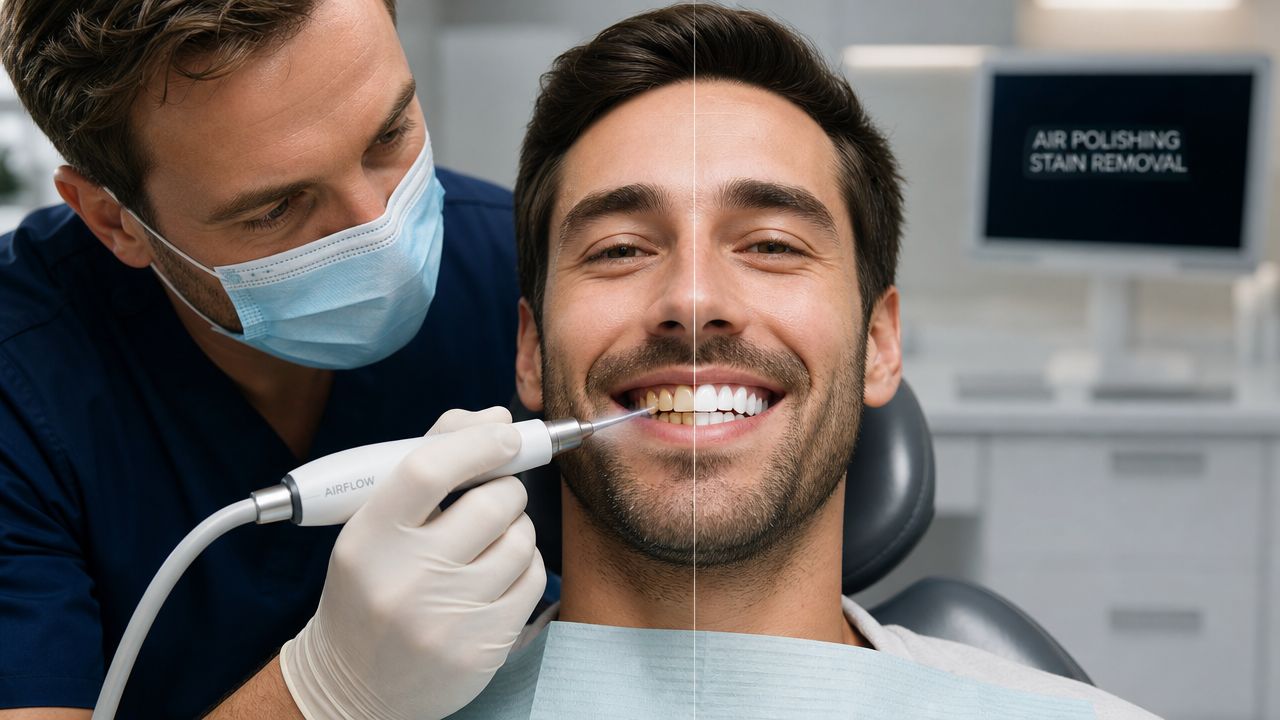
Yes, dentists can remove many tooth stains, and modern air polishing can remove moderate to heavy surface stains in an average of 5.5 minutes compared with 13.4 minutes for a traditional rubber cup method, a time reduction of about 59%. The key is that the right treatment depends on whether the stain is on the surface of the tooth or inside the tooth itself.
If you're looking in the mirror after years of coffee, tea, red wine, or tobacco and wondering whether a local dentist can help, the answer is often yes. Patients in Fair Lawn, Ridgewood, and Glen Rock usually don't need to guess which product to buy or try another whitening toothpaste that barely changes anything. They need a clear diagnosis and a treatment plan that matches the kind of discoloration they have.
A lot of online advice misses that point. Cleaning and whitening are not the same thing, and that confusion is why many people leave a hygiene visit with cleaner teeth but not the brighter shade they expected. If you've been searching for a dentist near me, a cosmetic dentist near me, or a dentist in Fair Lawn, NJ because your smile looks dull or stained, it helps to know what can be removed, what can be whitened, and what may need a different cosmetic approach.
Some patients first notice staining in photos. Others see it around the edges of the front teeth after a few years of coffee or tea. A common conversation in a cosmetic consultation starts with, "I brush every day, so why do my teeth still look dark?" The answer often comes down to what is sitting on the enamel and what has changed within the tooth.

At a routine hygiene visit, a dentist or hygienist can remove extrinsic stains, which are surface stains, by using ultrasonic scalers and hand instruments to clear away plaque deposits and buildup, then polishing with conventional prophy polish or Air-flow technology to clean stained enamel without bleaching the tooth structure, as described in the British Dental Journal Team overview of stain removal during hygiene care. That means many common stains from coffee, tea, wine, and tobacco can often be improved in a single visit.
The question isn't just, "Can dentist remove stains from teeth?" It's really asking a few practical questions at once:
A cleaner smile and a whiter smile can overlap, but they aren't automatically the same result.
For families looking for a dentist in Fair Lawn, NJ, it helps to work with a practice that offers both routine dental care and cosmetic dentistry. That way, the solution doesn't stop at "you need a cleaning" if the issue turns out to be deeper discoloration. In the same office, patients may also discuss related goals such as teeth whitening, veneers, bonding, Invisalign, Six Month Smile, restorative dentistry, or even urgent needs with an emergency dentist if a dark tooth is tied to trauma.
Patients in Fair Lawn, Ridgewood, and Glen Rock usually want straight answers and nearby care they can return to for maintenance. A neighborhood dental office should make that easy. Clear patient education matters in every service business, which is one reason practices often invest in communication support like our marketing services from Leaping Lemur Media to make helpful information easier for patients to find and understand before they book.
The most important distinction is this. Extrinsic stains are on the outside of the tooth. Intrinsic stains are inside the tooth.
Consider a window: If the glass has fingerprints or residue on the outside, you can clean it. If the color is inside the glass itself, wiping the surface won't change the shade. Teeth work the same way.
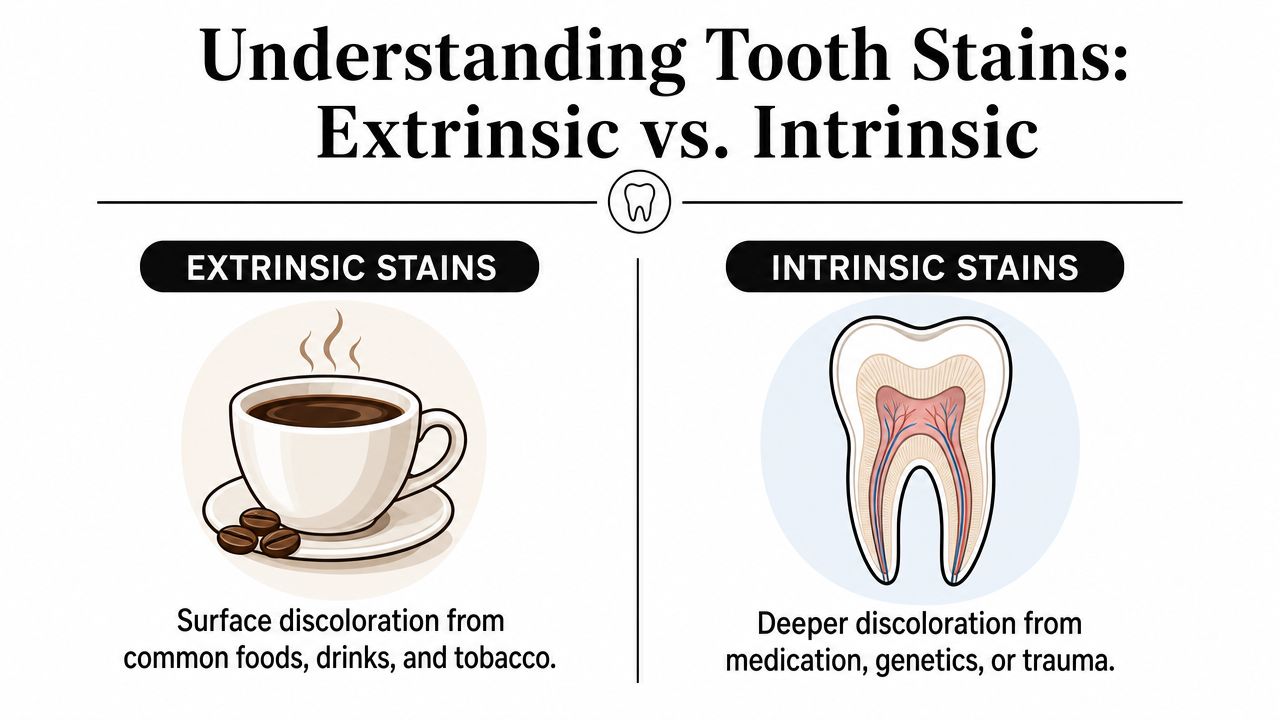
These are the stains patients usually notice after habits and foods leave pigment on enamel. Common examples include discoloration related to coffee, tea, wine, and tobacco. Surface buildup can also collect around areas where brushing and flossing miss plaque.
A professional cleaning targets this category well because the stain is on the enamel surface or mixed with plaque and tartar deposits.
These are deeper color changes within the tooth. They may be connected to trauma, tetracycline exposure, fluorosis, aging changes, or internal discoloration in a non-vital tooth. In those cases, the tooth can look darker even when the surface is completely clean.
According to this explanation of the difference between hygiene stain removal and whitening, many articles blur cleaning and whitening together, but if a patient has intrinsic stains from trauma, tetracycline, or fluorosis, a standard cleaning will produce zero color change. That's the expectation-setting point many people never hear before they schedule.
Practical rule: If the tooth is clean but still dark, the answer usually isn't more scrubbing.
If someone books a cleaning expecting a whitening result, disappointment is almost guaranteed when the discoloration is internal. On the other hand, if someone jumps straight to whitening when the issue is heavy surface stain and tartar, they're skipping the simpler first step.
A useful way to compare the two is below:
| Stain type | Where it sits | What usually helps |
|---|---|---|
| Extrinsic | On the tooth surface | Professional cleaning and polishing |
| Intrinsic | Within the tooth | Whitening or other cosmetic treatment |
| Localized defect or resistant discoloration | Surface defect or deeper structural issue | Microabrasion, bonding, veneers, or crowns |
This is why a proper exam matters. It keeps patients from paying for the wrong service and helps a cosmetic dentist near me search lead to the right kind of appointment, not just the first available one.
When the stain is external, a routine hygiene visit often gives the fastest improvement. The process isn't just about making teeth feel smooth. It removes the material that holds stain, including plaque and tartar, and then buffs the enamel surface.
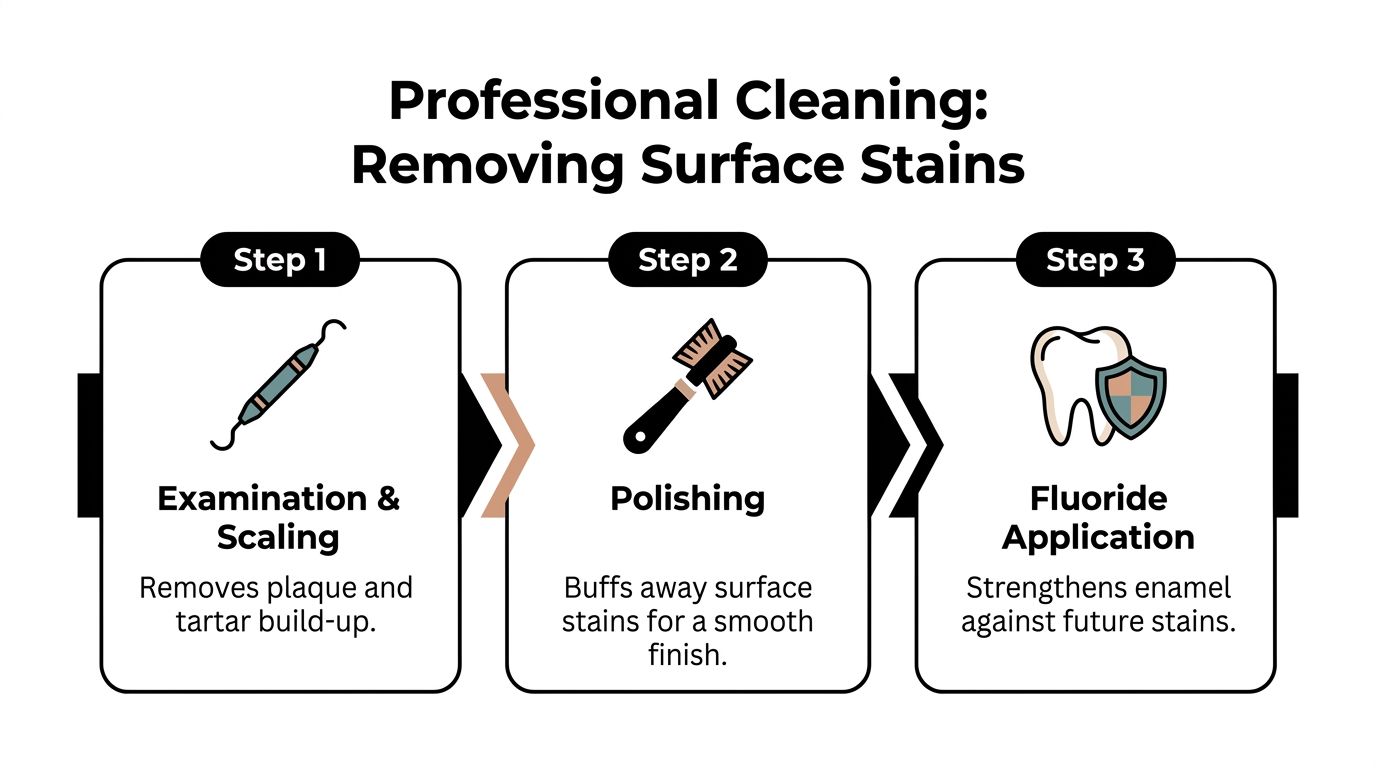
A professional cleaning for stain removal often includes a few stages:
Examination and scaling
The team checks where stain is collecting and removes plaque and tartar with instruments such as ultrasonic scalers and hand tools.
Polishing the enamel surface
Polishing helps lift residual surface discoloration and smooth the tooth.
Protective finishing care
Depending on your needs, the visit may include fluoride or personalized home care guidance to help slow new stain buildup.
For patients comparing methods, air polishing can be especially useful when there are moderate to heavy surface stains. In a clinical comparison, air polishing with sodium bicarbonate removed moderate to heavy stains in an average of 5.5 minutes versus 13.4 minutes for the rubber cup method, a reduction of about 59%. That's one reason many patients prefer modern polishing technology when they want visible surface stain removal without a long polishing phase.
People often respond to stains by brushing harder or using abrasive products. That usually doesn't solve the underlying buildup, and it can make teeth feel sensitive or worn without changing the deeper cause of discoloration.
A professional cleaning is more precise. It removes deposits intentionally and reaches areas around the gumline and between teeth that at-home methods don't handle well.
If your stain is from the outside in, cleaning is often the smartest first move before any whitening discussion.
Patients who want to book this type of visit can learn more about professional dental cleanings in Fair Lawn. This is often the right starting point for individuals seeking routine cleaning and exams, dental care, or a dentist near me because their smile looks yellow or stained.
Once the tooth surface is clean, the next question is whether the color itself can be lightened. That's where teeth whitening comes in. Whitening doesn't scrape stain off the enamel. It uses bleaching agents to change color within the tooth structure.
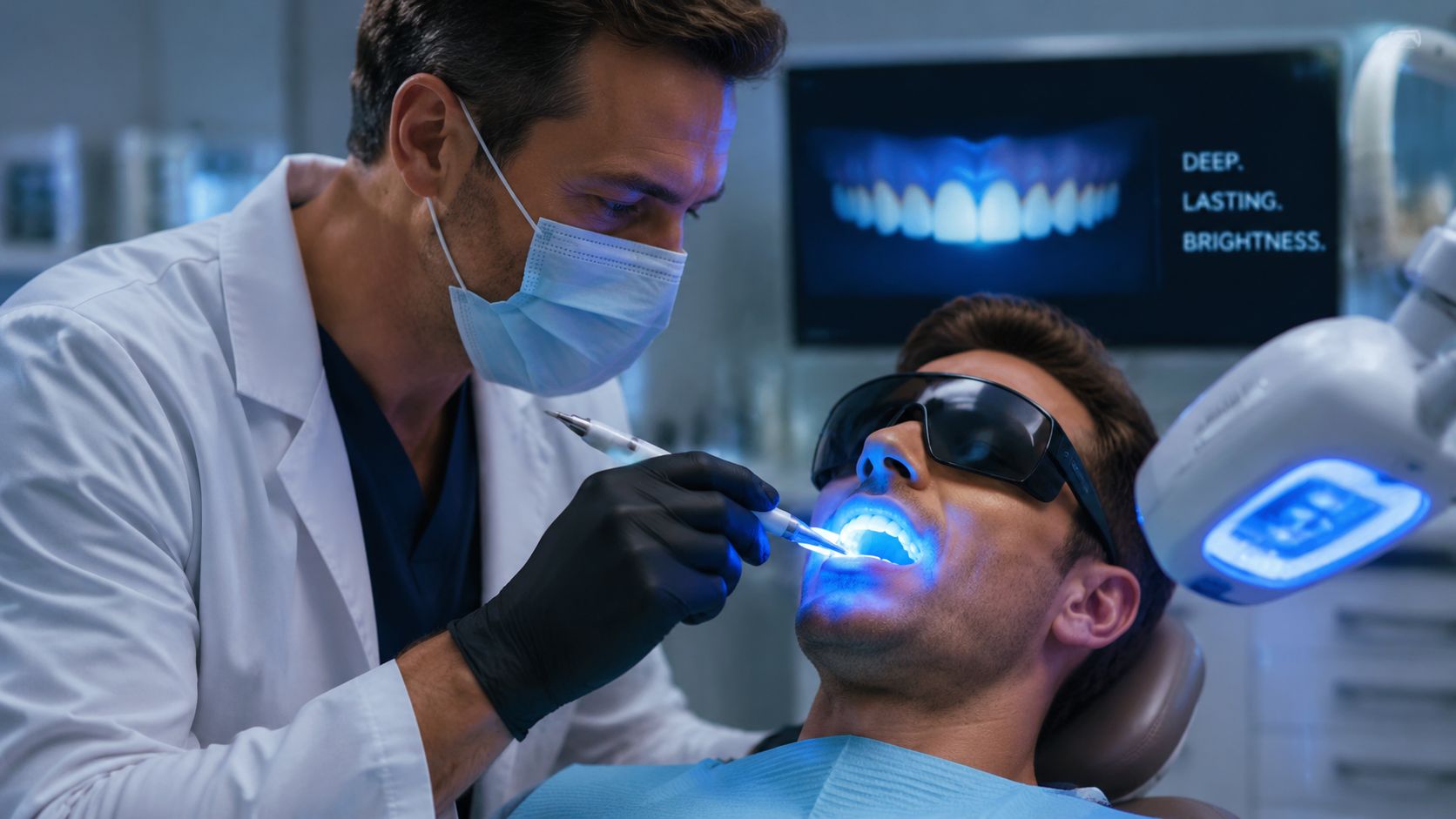
Professional whitening generally falls into two categories.
In-office whitening is the faster option. Higher-concentration peroxide is used under dental supervision to produce a stronger change more quickly.
Take-home whitening uses custom trays and a lower-concentration gel over a longer period. This approach can be more gradual and convenient for patients who prefer flexibility.
A reviewed summary of whitening outcomes and sensitivity notes that in-office whitening produces a color change of about 3.3 compared with about 2.0 for at-home treatment, while tooth sensitivity affects 30% to over 78% of patients depending on concentration and protocol. The same summary notes that sensitivity usually peaks right after treatment and diminishes significantly within 24 hours, with full resolution generally occurring within two weeks.
Whitening works well, but it isn't completely consequence-free. Faster whitening usually comes with a higher chance of short-term sensitivity. That doesn't mean patients should avoid it. It means they should choose the method that fits their priorities.
Some patients say, "I want the quickest result possible." Others say, "I want improvement, but I need the gentlest route." Both are reasonable goals.
For a closer look at options, patients can review professional teeth whitening information from the practice.
A short overview can also help before a consultation:
Whitening is worth considering if your teeth are clean but still look darker, more yellow, or uneven in shade. It's also a common step before bonding, contouring, or other cosmetic work so the final color plan is more predictable.
In a full-service office, this conversation may happen alongside other cosmetic goals. Some patients asking about stain removal also want alignment improvements with Invisalign or Six Month Smile, or they may be planning restorative work such as crowns, bonding, or even dental implants near me searches after tooth loss. Shade planning matters across all of those decisions.
Some discoloration doesn't improve enough with cleaning or bleaching. That doesn't mean you're out of options. It means the stain may be too deep, too localized, or tied to a defect in the enamel or underlying tooth structure.
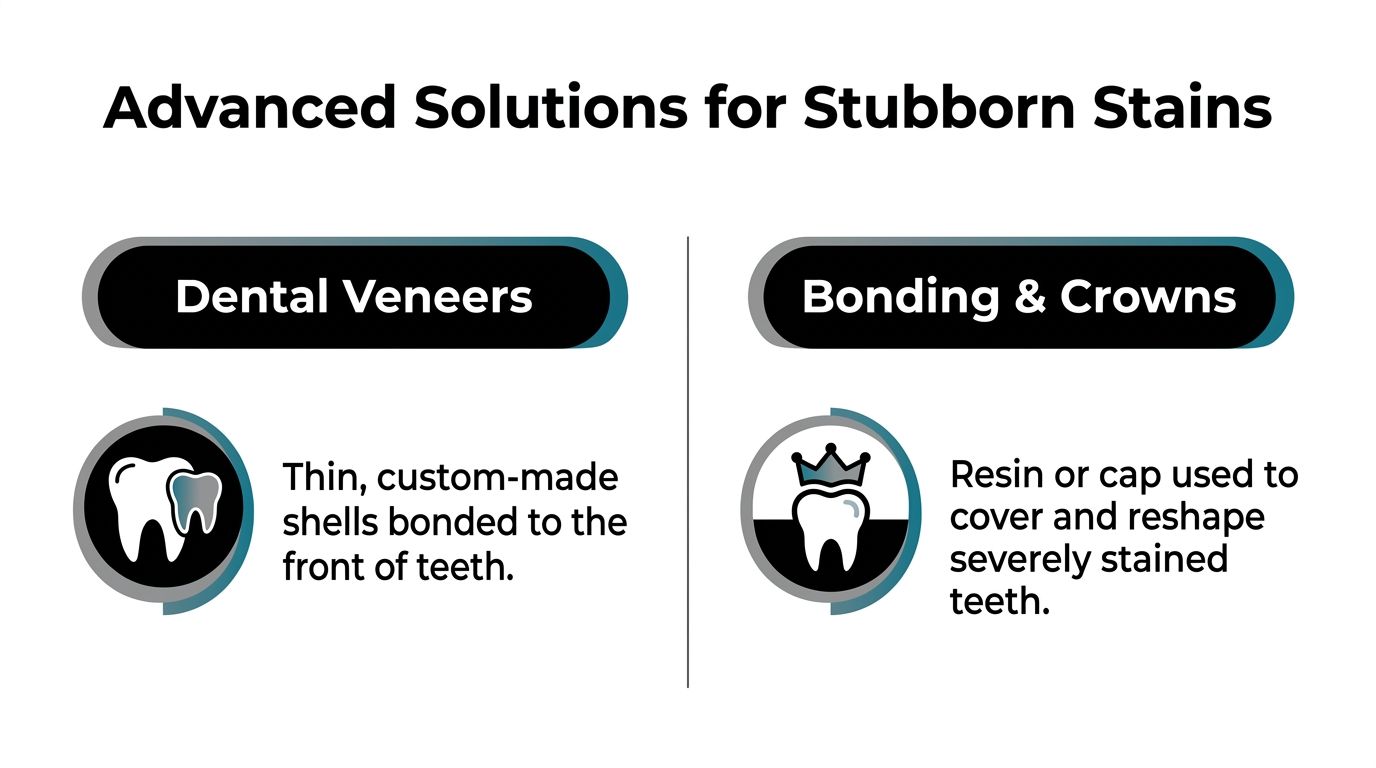
For certain enamel-level spots and superficial discolorations, dentists may use microabrasion. This technique combines 10% to 18% hydrochloric acid with abrasive particles to remove the outermost stained enamel, often within the first 0.05 to 0.1 mm, as described in this overview of microabrasion for stain removal. It's a very specific treatment for very specific situations. It is not the same as routine polishing.
For stains that are isolated or structurally resistant, bonding can cover the affected area with tooth-colored resin. This can be useful when one tooth or one section of a tooth stands out.
Veneers are thin restorations bonded to the front of teeth to change color and shape at the same time. They're often considered when someone wants a broader smile redesign rather than stain treatment alone.
Crowns may be more appropriate when a tooth is heavily restored, structurally weakened, or extensively discolored.
| Option | Best suited for | Main purpose |
|---|---|---|
| Microabrasion | Very specific superficial enamel discoloration | Remove a thin stained enamel layer |
| Bonding | Localized color defects or shape concerns | Mask and reshape with composite |
| Veneers | Multiple front teeth with cosmetic concerns | Create a uniform color and form |
| Crowns | Teeth needing full coverage | Restore strength and appearance |
Whitening can lighten many teeth. It can't fix every stain pattern or every enamel defect.
This is also where cosmetic care often overlaps with restorative dentistry. A patient may come in focused on color but discover a crack, old filling edge, or worn enamel that changes the recommendation. In some cases, a dark tooth after injury may also need an evaluation similar to what patients seek from an emergency dentist. If a tooth is damaged beyond repair, broader options such as tooth extraction and replacement planning may become part of the discussion.
A patient often comes in saying, "My teeth look stained, but whitening strips did nothing." That usually points to the question that matters most. Are the stains sitting on the surface, or is the color change inside the tooth? The consultation is where that distinction becomes clear, because cleaning removes surface stain and whitening changes internal tooth color. They are not the same treatment.
The visit starts with a close look at the pattern of discoloration. A general yellow or brown film near the gumline suggests surface staining from coffee, tea, tobacco, or plaque buildup. One tooth that looks darker than the rest raises a different concern and may need more than cosmetic care. If the cause is not obvious by appearance alone, new patient exams, cleanings, and dental x-rays can help identify what is driving the color change.
The goal is a plan that matches the type of stain, the condition of the teeth, and your priorities. That usually includes:
That discussion matters. Patients sometimes assume whitening is the strongest answer for every stain, but whitening does very little for tartar, surface buildup, or certain internal discolorations. In other cases, a cleaning improves the smile more than expected because the problem was external stain all along.
Dental Professionals of Fair Lawn offers professional in-office whitening as one option, but only when it fits the diagnosis. That matters because the wrong treatment wastes time and can leave patients frustrated, especially after they have already tried store-bought products without results.
I regularly see enamel irritated by internet remedies that promise fast stain removal. Lemon juice, charcoal, and abrasive scrubbing can roughen the tooth surface instead of making it cleaner.
According to this video discussion of DIY acid damage and stain risk, once enamel is etched by acidic stain-removal hacks, it doesn't grow back and the tooth can absorb future stains more quickly. A rougher surface also tends to hold onto pigment more easily.
Home stain remedies can make teeth look worse over time by wearing enamel and increasing future stain retention.
For patients in Fair Lawn, Ridgewood, and Glen Rock, a consultation gives a clear answer about what kind of discoloration is present and what treatment is worth doing. It can also uncover related issues such as worn enamel, defective fillings, or a dark tooth after injury that needs more than cosmetic treatment.